Address
304 North Cardinal St.
Dorchester Center, MA 02124
Work Hours
Monday to Friday: 7AM - 7PM
Weekend: 10AM - 5PM

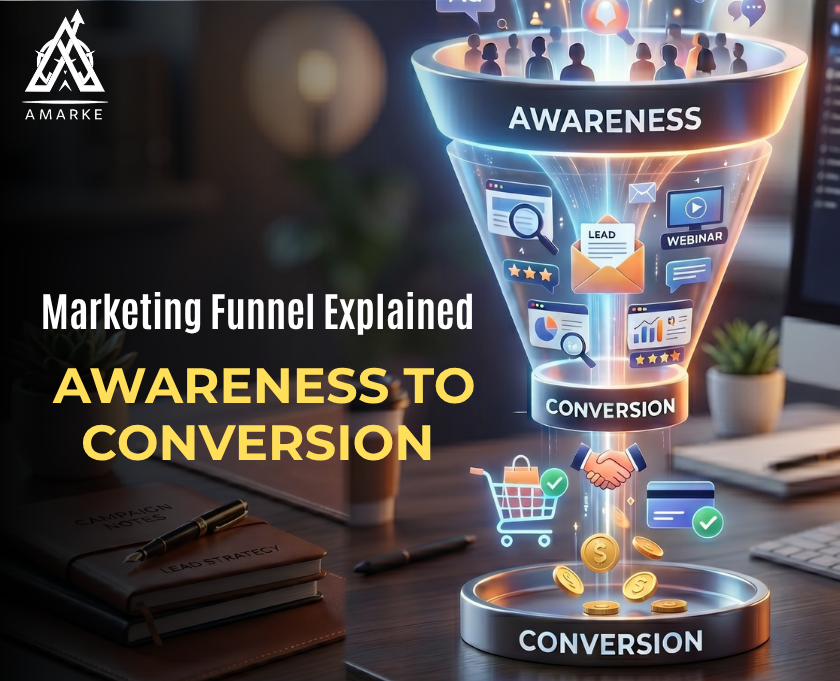
In today’s competitive digital landscape, understanding the marketing funnel is essential for businesses aiming to maximize reach, boost engagement, and drive conversions. Whether you’re a startup or an established brand like Amarke, a well-structured digital marketing funnel helps turn strangers into loyal customers while improving overall marketing performance.
This SEO-optimized guide explains each stage of the marketing funnel from awareness to conversion, along with strategies to improve reach, engagement, and conversion rates.
A marketing funnel is a structured framework that represents the journey a potential customer takes, starting from discovering your brand to making a purchase decision. It is a crucial part of any digital marketing strategy, helping businesses attract, nurture, and convert leads effectively.
The funnel typically includes stages such as awareness, interest, consideration, conversion, and retention. Each stage requires different marketing techniques to move users closer to a purchase decision.
The awareness stage is the top of the funnel where the primary goal is to increase brand visibility and attract a large audience. At this stage, users may not know about your brand, so the focus is on creating strong first impressions through high-reach marketing strategies.
Businesses use search engine optimization (SEO), social media marketing, and paid advertising to increase website traffic and reach new audiences. Content such as blogs, reels, and infographics plays a key role in capturing attention and driving organic traffic. A strong awareness strategy ensures your brand appears where your audience is already spending time online.
Once users become aware of your brand, the next step is to capture their interest and encourage deeper engagement. This stage focuses on building a connection with potential customers by offering valuable and relevant content.
Effective strategies include email marketing campaigns, lead magnets like free guides or ebooks, and engaging landing pages that encourage users to take action. Interactive content such as polls and quizzes also helps increase user engagement. By consistently delivering value, businesses can keep users interested and move them further down the sales funnel.
In the consideration stage, potential customers are evaluating their options and comparing different brands. This is where businesses need to build trust and demonstrate their value clearly.
Strategies such as case studies, testimonials, product comparisons, and retargeting ads help reinforce credibility. Email drip campaigns can also be used to provide additional information and keep users engaged over time. A well-executed lead nurturing strategy ensures that your brand stays top-of-mind when the customer is ready to make a decision.
The conversion stage is where potential customers take action and become paying customers. At this point, the focus is on eliminating friction and making the buying process as smooth as possible.
Clear and compelling call-to-actions, limited-time offers, and an optimized checkout experience can significantly improve conversion rates. Trust signals such as customer reviews and ratings further encourage users to complete their purchase. Businesses that prioritize conversion rate optimization often see better results and higher returns on their marketing efforts.
The marketing funnel does not end at conversion. Retention is a critical stage that focuses on turning customers into repeat buyers and loyal brand advocates.
Businesses can achieve this through personalized email follow-ups, loyalty programs, and exclusive offers. Providing excellent customer support and maintaining consistent communication helps build long-term relationships. Strong customer retention strategies not only increase lifetime value but also encourage word-of-mouth marketing.
For a digital marketing agency like Amarke, implementing a structured marketing funnel strategy is essential for delivering measurable results. It helps improve lead quality, increase engagement rates, optimize advertising spend, and boost overall conversion performance.
By aligning marketing efforts at each stage of the funnel, Amarke can create targeted campaigns that drive real business growth for clients while enhancing their digital presence.
The marketing funnel explained from awareness to conversion highlights the importance of guiding customers through every stage of their journey. Businesses that focus on building reach, increasing engagement, and optimizing conversions are more likely to succeed in today’s digital-first world.
Mastering the marketing funnel allows brands to create meaningful connections with their audience, improve marketing efficiency, and achieve sustainable growth.
