Address
304 North Cardinal St.
Dorchester Center, MA 02124
Work Hours
Monday to Friday: 7AM - 7PM
Weekend: 10AM - 5PM

 ByAmarke
In today’s competitive online world, every business wants higher visibility on search engines. Whether you run an eCommerce store, local business, startup, or service company, SEO for business growth is one of the most effective digital marketing strategies. But many business owners often ask an important question: What is the difference between On Page SEO and Off Page SEO?
Understanding On Page vs Off Page SEO is essential if you want to improve website rankings, attract organic traffic, and build a strong online presence. At Amarke Digital Marketing Agency, we help brands use smart SEO techniques to grow faster and rank better on Google.
Search Engine Optimization, commonly called SEO, is the process of improving your website so that it appears higher in search engine results. When people search for products or services online, businesses that rank on the first page get more clicks, more leads, and more conversions.
SEO is mainly divided into two categories: On Page SEO and Off Page SEO. Both are equally important for long-term success.
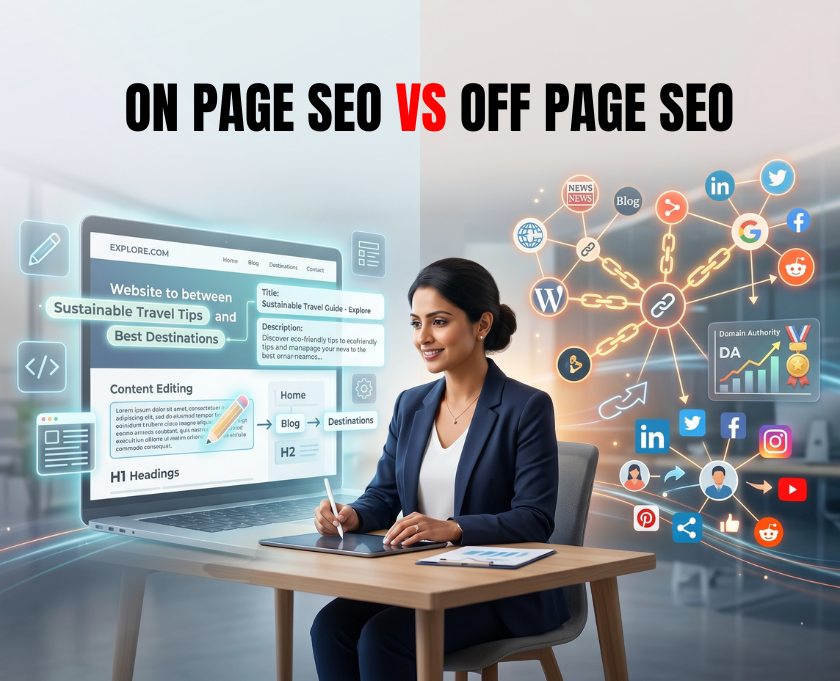
On Page SEO refers to all the optimizations done directly on your website to improve rankings and user experience. It focuses on making your website more search engine friendly while also helping visitors find useful information easily.
This includes optimizing page titles, meta descriptions, content quality, internal links, keyword placement, image alt tags, URL structure, mobile responsiveness, and website speed.
For example, if your business website has a blog titled “Best Digital Marketing Services,” using relevant keywords naturally throughout the article and ensuring fast loading speed are part of On Page SEO services.
The foundation of strong On Page SEO starts with keyword research. Choosing the right keywords helps search engines understand what your content is about.
High-quality content is another major factor. Google rewards websites that provide valuable, relevant, and engaging information.
Title tags and meta descriptions also matter because they influence click-through rates from search results.
Internal linking helps users navigate your website while improving crawlability.
Technical factors like mobile optimization, page speed, clean URLs, and secure HTTPS connections are essential for better rankings.
Off Page SEO refers to actions taken outside your website to improve authority, trust, and reputation. While On Page SEO focuses on your site itself, Off Page SEO helps search engines understand how trustworthy and popular your website is.
The most common example of Off Page SEO techniques is backlink building. When reputable websites link to your pages, search engines see your content as valuable.
Other Off Page SEO methods include social media marketing, influencer outreach, brand mentions, guest posting, online PR, directory submissions, and review management.
Backlinks remain one of the strongest ranking signals in SEO. Quality matters more than quantity, which means links from trusted websites are more powerful than random low-quality links.
Brand mentions across the web also improve authority, even if they are not clickable links.
Social media presence helps drive traffic, increase awareness, and support brand credibility.
Online reviews are important for local businesses because they build trust and influence customer decisions.
Guest blogging on niche websites can generate both traffic and backlinks.
The biggest difference between On Page SEO vs Off Page SEO is control. On Page SEO is fully under your control because changes happen directly on your website. Off Page SEO depends on how others interact with your brand online.
On Page SEO improves relevance by helping search engines understand your content. Off Page SEO improves authority by showing that other sources trust your website.
On Page SEO includes content optimization, keyword placement, technical improvements, and user experience. Off Page SEO includes backlinks, promotions, reviews, and reputation building.
Both strategies work together. A website with excellent content but no authority may struggle to rank. Likewise, a website with backlinks but poor content may not retain visitors.
Many businesses ask whether On Page SEO or Off Page SEO is more important. The truth is both are essential.
Without On Page SEO, search engines may not understand your pages. Without Off Page SEO, your website may lack authority compared to competitors.
The best SEO strategy combines both methods. First, optimize your website structure and content. Then build authority through quality backlinks and digital promotion.
At Amarke, we provide complete SEO services for businesses that include On Page SEO optimization, Off Page SEO campaigns, keyword strategy, content marketing, link building, technical SEO audits, and monthly performance tracking.
Our goal is simple: help businesses rank higher, generate quality leads, and increase revenue through smart digital marketing solutions.
Whether you are a startup or an established brand, our expert team creates custom SEO strategies that deliver measurable growth.
Understanding On Page vs Off Page SEO is the first step toward online success. On Page SEO strengthens your website from within, while Off Page SEO builds trust and authority across the internet.
When combined effectively, they create long-term visibility, higher rankings, and sustainable traffic growth.
If you want professional SEO support, Amarke is here to help your business grow faster with result-driven strategies.